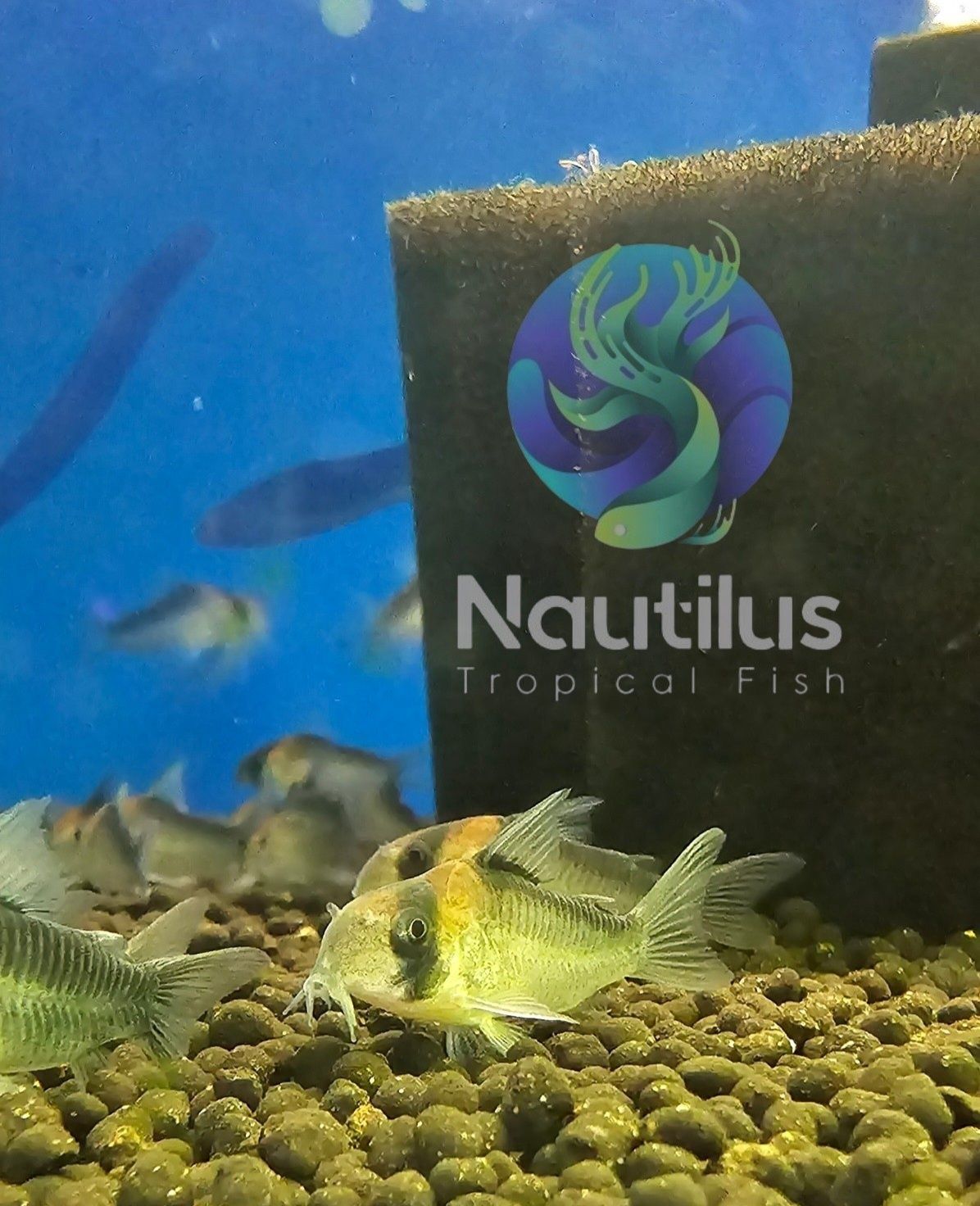
Adolfi Corydoras (Corydoras adolfoi)
$12.99
Buy and save
Buy and earn $0.12 Loyalty for your next purchase
Loyalty is a discount program that lets you buy products and earn points to redeem on your next purchase. Your Loyalty balance is updated when you pay online or in-store. The Loyalty amount shown on this page can be recalculated at the checkout.
In stock: 26 available
Product Details
Details
Species: Adolfi Corydoras
Scientific Name: Corydoras adolfoi
Common Names: Adolf’s Cory, Black Stripe Cory
Size: 1 – 1.5 inches (juveniles)
Category: Freshwater Fish – Corydoras Catfish
Description
The Adolfi Corydoras (Corydoras adolfoi) is one of the most striking and sought-after Cory species in the aquarium hobby. Recognized by its crisp white to silver body, bold black eye mask, and distinctive black dorsal stripe with a splash of orange behind the head, this species brings elegance and activity to any freshwater community tank.
Native to the Rio Negro basin in Brazil, Adolfi Corys thrive in soft, slightly acidic water and appreciate natural décor such as driftwood, leaf litter, and fine sand substrates. They are peaceful bottom dwellers that constantly sift through substrate in search of food, making them both functional and entertaining additions to planted aquariums.
Care Level
Easy to Moderate
Adolfi Corys are hardy when provided stable water conditions and clean environments.
Temperament
Peaceful
They are schooling fish and should be kept in groups of at least 6, though larger groups of 8–12 are recommended for natural behavior and reduced stress.
Size
Up to 2 inches fully grown
Most specimens available are juveniles between 1–1.5 inches.
Lifespan
5–8 years with proper care
Diet
Omnivorous
Adolfi Corys thrive on:
High-quality sinking pellets or wafers
Frozen foods (bloodworms, brine shrimp, daphnia)
Occasional live foods
They are not algae eaters and should be directly fed to ensure proper nutrition.
Tank Size
Minimum: 20 gallons
Larger tanks are recommended for schools and community setups.
Water Parameters
Temperature: 72–78°F
pH: 5.5–7.0
Hardness: Soft to moderately soft water
Substrate: Fine sand preferred to protect barbels
Stable, clean water is essential. Regular water changes help maintain optimal health.
Behavior & Compatibility
Adolfi Corydoras are extremely peaceful and ideal for:
Tetras
Rasboras
Dwarf Cichlids
Peaceful Gouramis
Other Corydoras species
Avoid aggressive or large predatory fish.
They are highly active during the day and display charming schooling behavior when kept in proper groups.
Notes
Best kept in groups of 6+
Provide hiding spots with driftwood and plants
Sensitive to poor water quality
Tank-bred and wild specimens may vary slightly in coloration
Save this product for later
Adolfi Corydoras (Corydoras adolfoi)
Customer reviews on “Adolfi Corydoras (Corydoras adolfoi)”
Reviews only from verified customers
No reviews yet. You can buy this product and be the first to leave a review.
Powered by Lightspeed
Display prices in:USD